Orthognathic Surgery in Purcellville, VA
Patient-Centered Care
Correcting How the Jaws Meet
"Jaw correction is a planned sequence, not a single appointment — and every stage should be explained before it begins."
Loudoun Valley Oral Surgery
Purcellville, VA Specialist
Orthognathic surgery — often called corrective jaw surgery — repositions the upper jaw, the lower jaw, or both so that they meet in a balanced, functional relationship. It is the treatment of choice when a bite problem comes from the position of the jaws themselves rather than the position of the teeth, which means braces alone cannot fully correct it. At Loudoun Valley Oral Surgery, evaluation and planning happen right here in Purcellville, in coordination with your dentist and orthodontist, so you are not travelling to a major metro simply to be assessed.
What It Corrects
Conditions Corrective Jaw Surgery Addresses
A skeletal discrepancy means the jaws differ in size or position — one may sit too far forward or back, they may be rotated relative to one another, or the height of the face may be affected. The result is a bite that cannot be fully corrected by moving teeth alone.
Common reasons for evaluation
- —Underbite — the lower jaw sits ahead of the upper jaw, so the lower teeth close in front of the upper teeth.
- —Overbite or a retruded lower jaw — the lower jaw is set back, which can leave a deep bite and a recessed chin.
- —Open bite — the front or side teeth do not touch when the back teeth are closed, making biting through food difficult.
- —Facial asymmetry — one side of the jaw has grown differently, shifting the bite and the midline of the face.
- —Difficulty chewing or speaking that has persisted despite dental or orthodontic treatment.
- —Excessive tooth wear or strain on the jaw joints caused by bite forces landing in the wrong places.
Who Is a Candidate?
Corrective jaw surgery is generally considered once facial growth is largely complete — often the later teenage years or adulthood. Timing is part of what we assess at the consultation.
Good candidates are in reasonable general health, understand that treatment runs in phases alongside orthodontics, and have a functional concern that surgery can realistically improve.
Not every jaw discrepancy needs surgery. Where a bite can be managed with orthodontics, restorative dentistry, or conservative measures alone, we will say so plainly.
Surgical Approaches
How the Jaws Are Repositioned
The approach follows the diagnosis. Some corrections involve one jaw, others require both to be moved so the result is balanced and stable. Incisions are made inside the mouth wherever possible, and the repositioned bone is secured with small plates and screws while it heals.
Upper Jaw Surgery
The upper jaw is separated, repositioned, and fixed in its new location. This can move the jaw forward or back, correct its height, or level an asymmetry.
Lower Jaw Surgery
The lower jaw is divided behind the teeth and advanced or set back to meet the upper jaw correctly, then secured while the bone unites.
Both Jaws, or the Chin
Where the discrepancy involves both jaws, they are corrected in the same procedure. A separate chin adjustment is sometimes added to balance the lower face.
Planned in three dimensions before the day of surgery
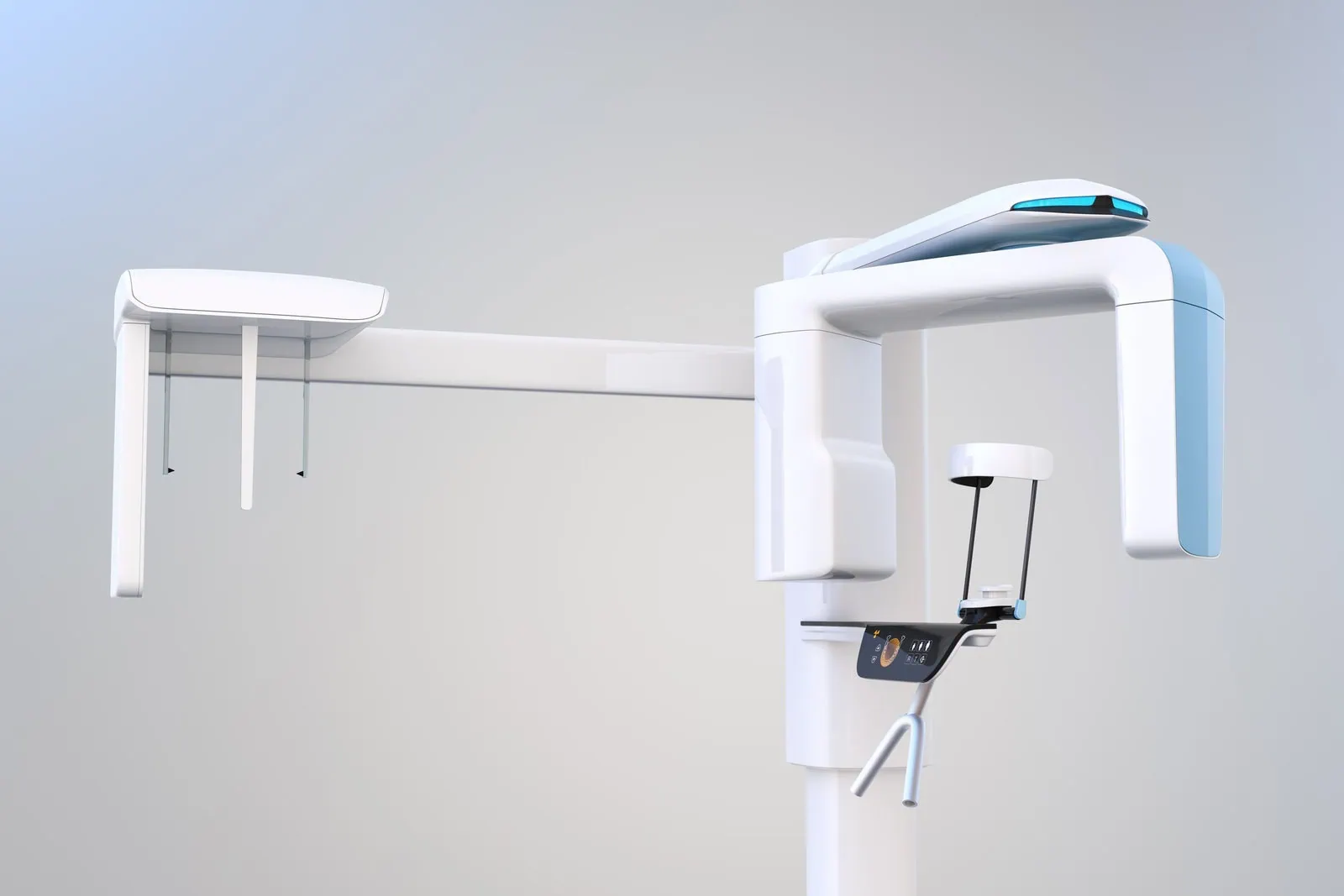
Our on-site cone beam CT scanner captures the bone, joint position, and nerve anatomy needed to plan jaw movement precisely — so the surgical plan is worked out and reviewed with you in advance, not decided in the moment.
What To Expect
The Course of Treatment
Every case runs to its own timeline. The outline below is a general guide to the stages, so you can picture the whole process rather than one appointment at a time.
Consultation and records
Examination, 3D imaging, and a discussion of what is driving the bite problem — along with an honest view of whether surgery is the right answer.
Orthodontic preparation
Your orthodontist aligns the teeth within each jaw so that, once the jaws are repositioned, the bite fits together properly. This phase commonly takes several months to over a year.
Surgical planning review
Updated records and imaging are used to finalise the plan. We walk through the intended movement, the anesthesia plan, and the practical arrangements for your recovery.
Surgery
Corrective jaw surgery is carried out under general anesthesia in a hospital or accredited surgical facility. Length depends on whether one or both jaws are being corrected.
Healing and finishing
Early healing brings swelling and a modified diet, easing over the following weeks. Bone union continues for several months, and a final orthodontic phase refines the bite before treatment is complete.
Recovery
Recovering After Jaw Surgery
Swelling peaks in the first few days and then steadily subsides — this is the part most patients find takes patience. You will be on a soft or liquid diet at first, progressing as healing allows and as we advise at each follow-up.
Most people take a couple of weeks away from work or school, though this varies with the procedure and with how physically demanding your routine is. Strenuous activity is restricted for longer.
Numbness of the lip or chin is common early on as nerves recover from being moved, and it typically improves over weeks to months. We review the risks specific to your case, including this one, before you consent to surgery.
Cost & Coverage
Insurance and Planning Ahead
Because corrective jaw surgery addresses function, it is frequently reviewed under medical rather than dental benefits. Coverage varies by plan and usually depends on documentation of the functional problem being treated.
We will explain what your treatment involves, what documentation is typically required, and where the costs fall across the surgical and orthodontic phases — so there are no surprises midway through.
Inquiries
Frequently Asked Questions
How long does the whole process take?
Most of the timeline is orthodontic rather than surgical. Preparation before surgery often runs from several months to over a year, and a finishing phase follows afterwards. We map out the expected sequence with your orthodontist at the planning stage so you know what you are committing to.
Will my face look different afterwards?
Moving the jaws changes the balance of the lower face, so some change in profile is expected — most patients regard it as an improvement. Because the movement is planned in advance with 3D imaging, we can discuss the likely effect on your profile before you decide to proceed.
Is my jaw wired shut after surgery?
In most modern cases, no. Securing the repositioned bone with small plates and screws generally avoids the need to fix the jaws together. Where any restriction on jaw movement is needed for your particular case, we explain it clearly beforehand.
Can braces alone fix my bite instead?
Sometimes, yes — and where that is the case we will tell you. Orthodontics moves teeth within the jaws; it cannot change where the jaws sit. When the underlying problem is skeletal, braces alone may camouflage it rather than correct it, which is why the evaluation looks at both together.
Do you work with my own orthodontist?
Yes. Orthognathic treatment is shared care, and we plan around the orthodontist you are already seeing wherever possible. Providers can send records and imaging through our referral form.
Corrective Jaw Surgery in Purcellville